Insta360 X6 Review: Sony Sensors Start a New Era for Action Cameras
The first 360 camera we would reach for ahead of a conventional action cam, thanks to the Sony sensors and a body that is simpler to use than anything we have tested.
- Dual Sony 1/1.1-inch sensors: real detail, even in low light
- Turn it on, hit record, go
- 140 minutes of 8K recording on one battery
- Waterproof to 20m bare, 60m with the dive case
- 47GB built-in storage
- US$150 more than the X5 at launch
In this article, you'll learn
- Why the Sony sensors make the X6 a different kind of release
- Which mode we used for most of our surf footage and why
- How the X6 handles water, battery life and transfer speeds
- How the X6 compares with the X5, X4, X3 and One X2, and whether to upgrade
The Insta360 X6 pairs two custom Sony 1/1.1-inch sensors with 8K 50fps 360 capture, 20-meter waterproofing and a 140-minute battery, and it is the first 360 camera we would reach for ahead of a conventional action cam.
A new era for action cameras
We have been reviewing action cameras here at Surfd for a long time, and most new models arrive with the same story: a slightly larger sensor, a little more battery, a new way to clip the thing to your head. The Insta360 X6 is a different kind of release. Insta360 has co-developed a pair of 1/1.1-inch square sensors with Sony, built exclusively for its 360 cameras, and that partnership adds a level of detail that just wasn't available in action cameras until now. It feels like the start of a new era for the category.
What the X6 does better than anything we have tested is capture the whole world around you. Lift it on the invisible selfie stick and the footage looks like a drone is tracking you down the line. Take it into the water and it keeps shooting. Point it at a beach barbecue or a trail through the bush and it handles that too. One camera, every angle, and you decide where to look afterwards.
Two days, small surf, plenty of footage
We test drove the X6 over a couple of days. The surf wasn't great, so this is not a review built on perfect barrels. Even so, we came away with some really fun ocean footage, plus beaches, forests and a hike or two, which is a fair picture of how most people will actually use a camera like this. (Nobody shoots their best session on the day the review gear arrives.)
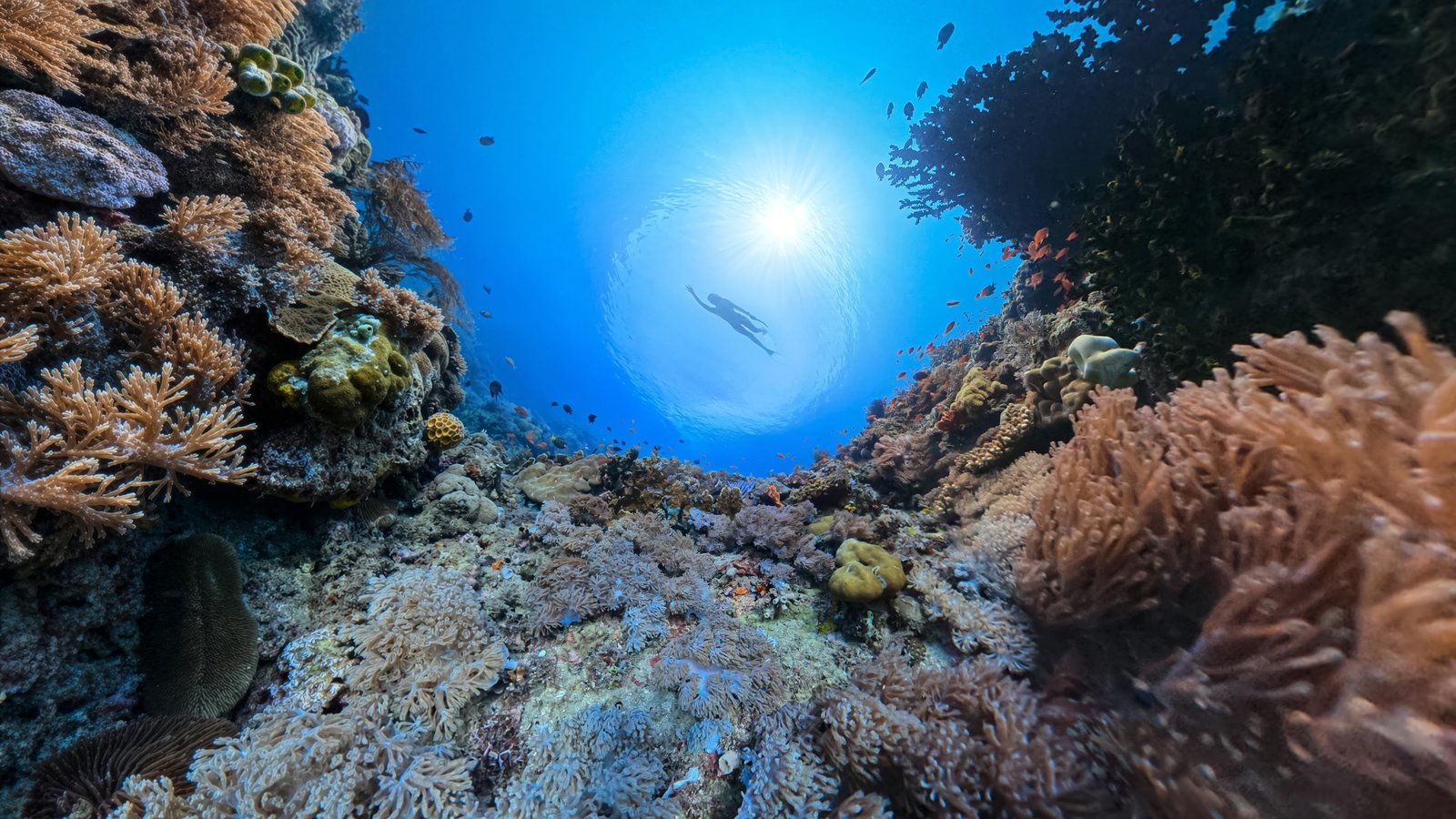
Everything in the video below is straight out of the camera. No filters, no color grading. What you see is what the X6 recorded.
Photos: Insta360
The Sony sensors change everything
The headline upgrade is the imaging stack. Two custom 1/1.1-inch square Sony sensors sit behind the lenses, and Insta360 pairs them with two dedicated imaging chips and a flagship 4nm Qualcomm processor. Insta360 puts that at roughly 33 percent more sensor area than the X5 and around four times the light per frame. In practice, the camera records native 8K 360 at 50fps, and the dedicated chips scrub noise out of the image before it ever reaches your editing timeline.
Where Insta360 says you'll notice it most is at the edges of the day: starry skies, dawn sessions, sunset glass-offs, the scenes that turned earlier action cameras into a grainy soup. Our two days were mostly in daylight, so we'll put the low-light claim to a proper test on the next trip. Dynamic range is wider too, according to Insta360, so a bright sky and a shaded face in the same frame should both survive.
Color is handled with 10-bit depth across every shooting mode, which means smooth gradients across a sunset rather than those ugly bands of color. The X6 is also the first 360 camera with native Dolby Vision, according to Insta360. It analyzes dynamic metadata frame by frame and sets brightness and contrast for each shot as it records. The result is footage that looks finished before you open an editor.
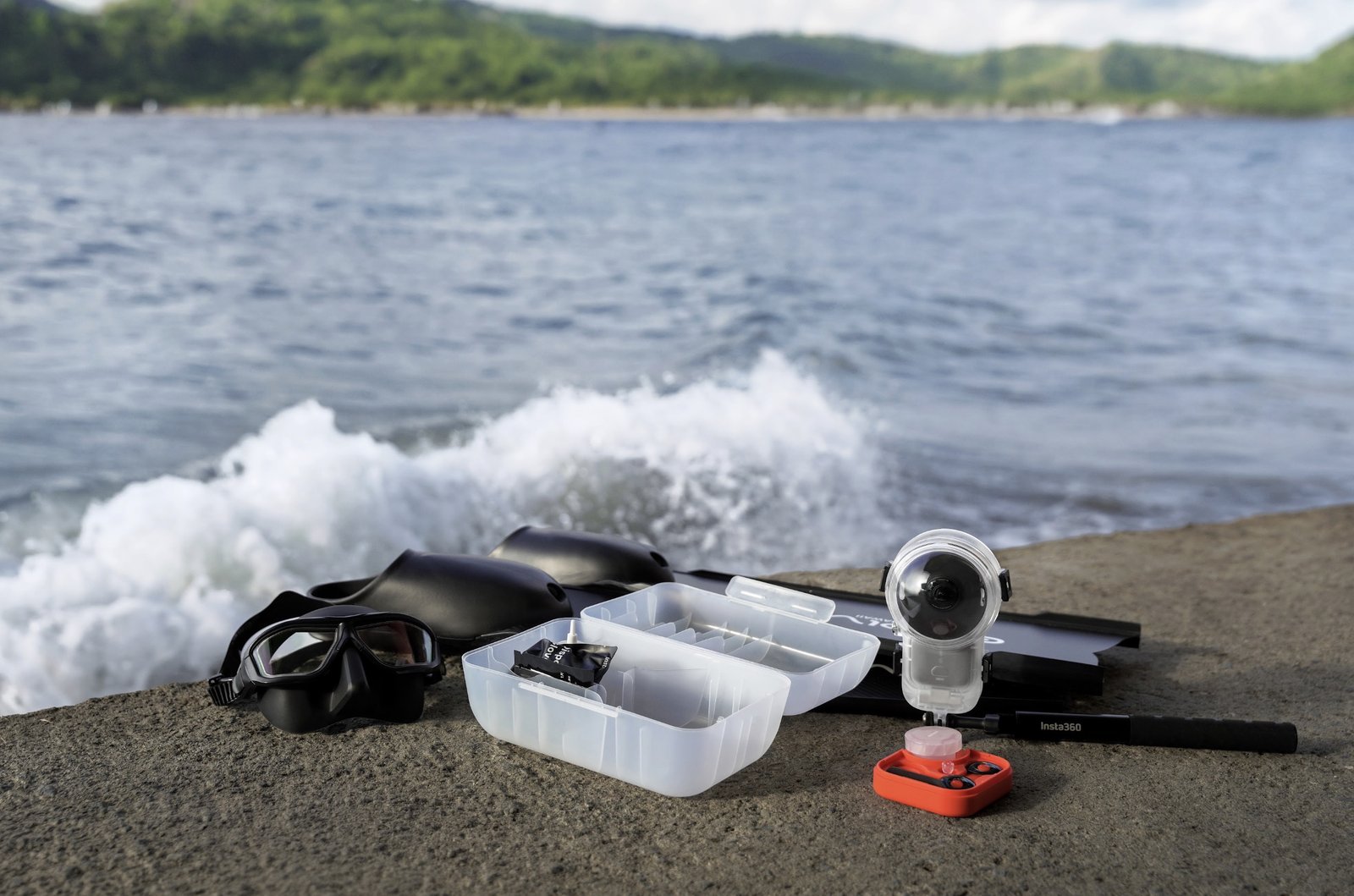
The lenses have had a rethink as well. Replaceable Lenses 2.0 are more scratch and damage resistant than the previous generation, easier to swap, and pack smaller. For a camera that lives in a wet, sandy bag, that matters.
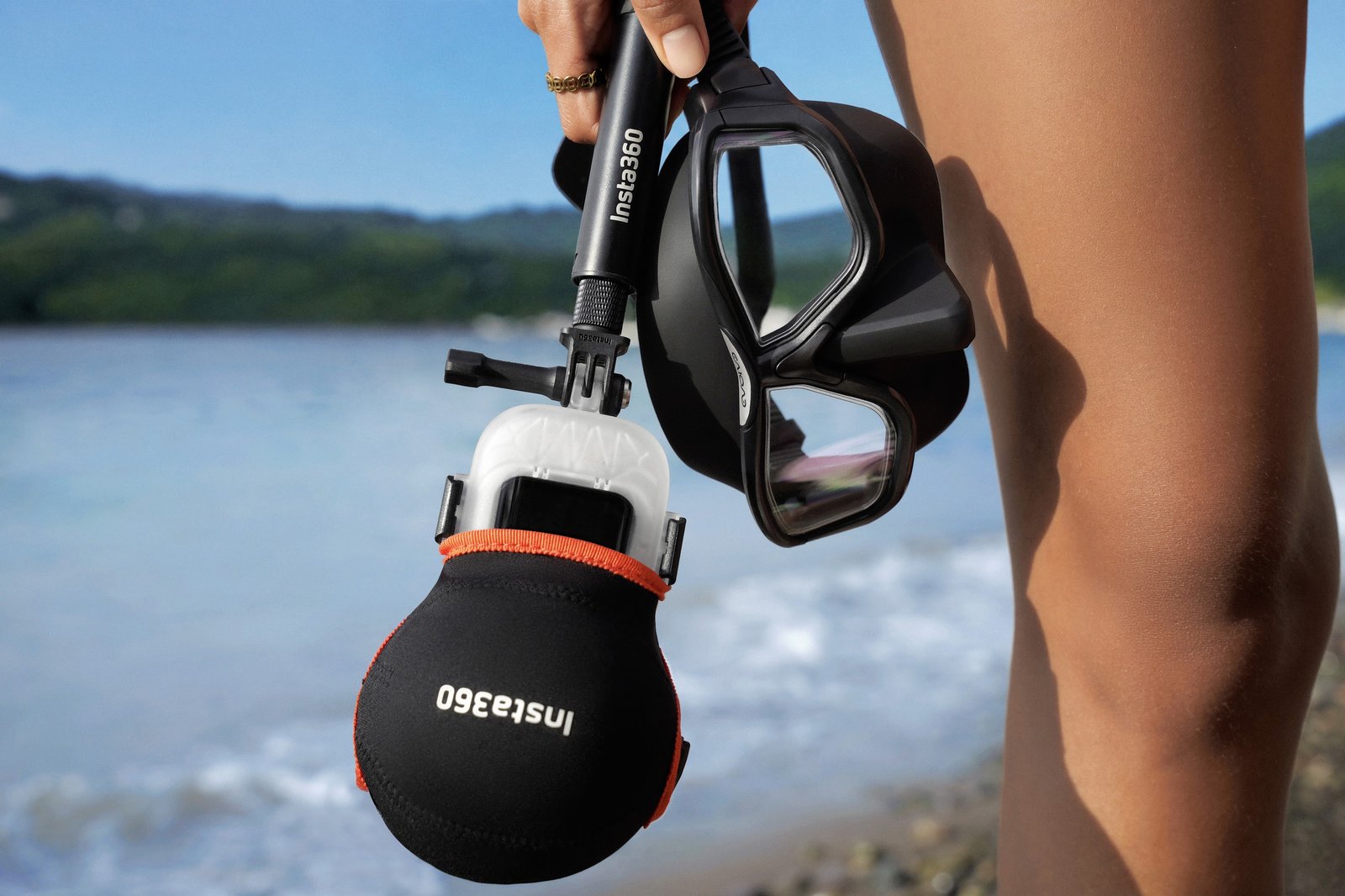
The lens cover and dive mask. Photo: Insta360
Single-lens mode is where our surf footage lives
Full 360 capture is the party trick, but most of our surfing footage was shot in single-lens mode at 4K 60fps. That frame rate lets us slow down the good moments on a wave and enjoy them properly. Switching is instant: tap once and the X6 becomes an ultra-wide action camera with a 170-degree field of view.
The numbers are strong for a camera this size. Single-lens mode records 5K at 60fps, 4K at 120fps for slow motion, and the 170-degree ultra-wide at 5K 30fps when you want to fit the whole beach in one frame. FlowState stabilization and 360 Horizon Lock kept our footage level and smooth through the chop and the walk back up the beach.
Turn it on, hit record, go
What we really like is how simple the X6 is to use. You don't need to read the manual. Turn it on, hit record, and go. That sounds like a small thing until you are wet, cold and trying to catch the last of the light.
Insta360 has built a lot of ways to start recording without hunting for a button:
- The whole screen is a record button. A pressure sensor under the display means you can press anywhere, gloves on, and it starts.
- A vibration motor gives haptic feedback, so you feel the camera change state even when it is at the end of a selfie stick.
- Twist the selfie stick twice and it starts or stops recording, or grabs a photo.
- Voice control and gesture control both work, which is handy for group shots or when the wind is howling. Gestures work with a helmet and gloves on.
Getting footage off the camera is just as painless. An NFC chip sits in the display, so you tap your phone against the camera to wake it and connect to the Insta360 app. First Bluetooth pairing takes about five seconds; after that, reconnecting takes one. Wi-Fi 6 transfers files wirelessly at up to 100MB/s, and the USB 3.0 port moves files from the built-in storage at up to 450MB/s if you prefer a cable.
Built for the water
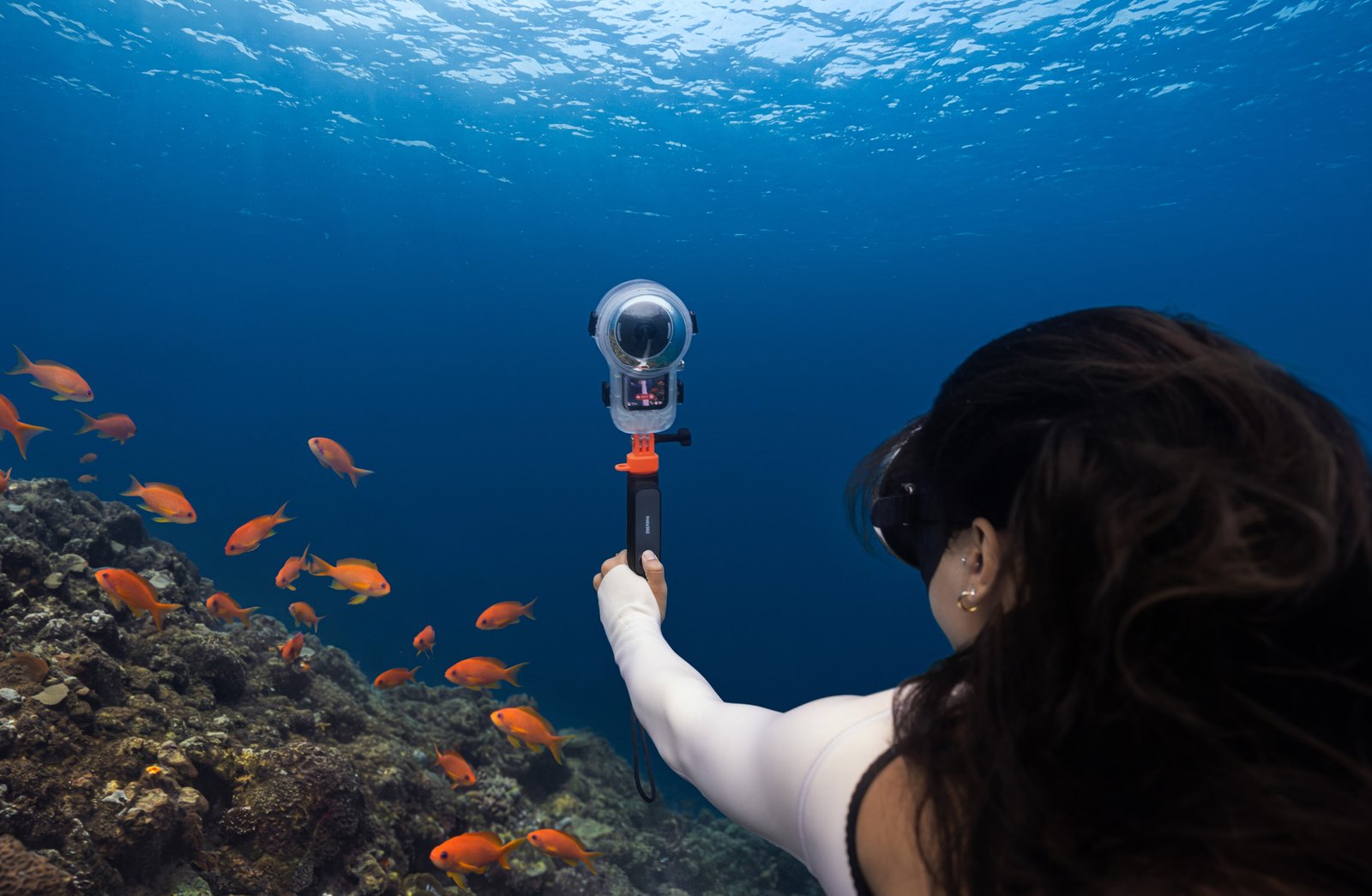
The X6 is waterproof to 20 meters on its own, with an IP68 rating, which is five meters deeper than the X5 managed bare. Add the Invisible Dive Case Pro and that drops to 60 meters (197 feet). The new case has been redesigned optically to deal with the way light bends underwater, so the two halves of the 360 image stitch cleanly instead of showing a seam. In our testing the case delivered crystal clear footage.
The first thing that caught our eye, before any of the specs, was the size. The X6 is shorter and more compact than the X5, palm-sized at 196 grams, and it slips into a wetsuit pocket, a backpack side pouch or a jacket. We mounted it on a surfboard, and the smaller body is much easier to live with there. A big, bulky camera like the X5 or X4 on the board meant more chance of something hitting you in a wipeout. This form factor is small enough that you forget it is there.
Paired with the invisible selfie stick, which the camera erases from the shot automatically, you get a natural third-person angle that looks as if a videographer were following you. This is the drone-like footage we mentioned earlier, without the drone, the batteries, or the wind limit.
And for the first time in the X series there is built-in storage: 47GB of it. Forget the microSD card at home and you can still shoot all morning.
Battery and sound
Battery life is great. Insta360 rates the new 2600mAh Xtreme Battery at up to 140 minutes of continuous 8K 30fps recording, a 51 percent jump on the X5, charging from empty to 80 percent in about 24 minutes. In our testing we never once ran out of battery over two days, which is amazing for a camera this powerful.
Audio has had attention too. A new 360 windproof microphone array records sound from every direction while filtering out wind, so voices stay clear and the ambient sound of the ocean stays balanced rather than becoming a roar. (There is also a Hidden Engine Mic tuned for motorcycles, which we did not test, on account of having no motorcycle.)
Editing, or letting the camera do it
We love cutting our own clips because Insta360 Studio makes it easy. Reframing 360 footage after the fact is the whole point of this kind of camera: you shoot everything, then decide in the edit whether the hero is the wave, the rider or the dog on the beach. The desktop Studio app is free, and the mobile app handles the quick stuff.
If you have no time for any of that, the X6 will edit for you. Insta360 has built its own 360 AI model, trained on more than 10,000 hours of footage across 30-plus scenarios, surfing, diving and cycling among them. Three features come out of it:
- AI Director cuts a finished highlight clip from your footage while the camera is charging and sends it to your phone.
- Auto Edit 2.0 turns one or more clips into a complete edit with framing, cuts, music and transitions in a tap.
- Moments Pro lets you type a few keywords (subject, mood, style) and get a stylized clip back.
On accessories, the X6 uses the same magnetic quick-release mount as recent Insta360 cameras, so it works with more than 100 existing accessories and over 50 quick-release ones. A new magnetic contact design adds power to that connection, which is what makes the new Power Selfie Stick possible: it feeds the camera for an extra 180 minutes of shooting.
Verdict
The X6 is the first 360 camera we would reach for ahead of a conventional action cam, and that is down to the sensors. Sony glass and silicon have given this category the detail it has been missing, and Insta360 has wrapped it in a body that is simpler to use than anything we have tested. It is not cheap: the Standard Bundle launched at US$699.99 and the Essentials Bundle at US$799.99, a $150 jump on the X5. If you already own an X5 and shoot mostly in good light, you can probably wait. If you shoot at dawn and dusk, want one camera for the water and everything around it, or are buying your first serious action camera, this is the one.
We can't wait to take it on a tropical adventure. Warm water, clear visibility, the dive case and a full battery. We will report back.
One more thing for readers who dive as well as surf: Insta360 has partnered with PADI on an Insta360 X Series Diver Distinctive Specialty Course, taught at PADI dive centers worldwide, which covers camera prep, safe underwater handling, 360 filming technique, reframing and editing. It was announced at DEMA Show 2026 in New Orleans alongside the X6 Dive Bundle.

The earlier X cameras: X5, X4, X3 and One X2
We have reviewed every Insta360 X since the One X2 in 2021, and those reviews now live here. Below is what each camera brought, what we said at the time, and whether it is worth upgrading. All four are still good cameras, and all four are cheaper than they were.
Insta360 X5 (2025)

What was new: dual 1/1.28-inch sensors with 144 percent more area than the X4, PureVideo noise reduction in 360 mode, user-replaceable lenses, 15m waterproofing, and a 2400mAh battery rated for up to 208 minutes at 5.7K 24fps with Endurance Mode on.
What we said: we rated it 4.9 out of 5. Gen longboard-skated and paddled out on her log while we tried angles with the Invisible Selfie Stick, and it turned a flat-day skate into a multi-angle sequence from one take. The replaceable lenses were the quietly brilliant change for a camera that lives in sand. Our one caveat was that 8K 360 demands storage and render headroom. Watch our X5 field test.
Upgrade to the X6? Yes if you shoot at dawn and dusk, want 20m waterproofing without the case, or want the smaller body on a surfboard. If you shoot mostly in good light, the X5 is still excellent.
Insta360 X4 (2024)

What was new: 8K 360 video, 5.7K at 60fps, 4K at 100fps in single-lens mode, 10m waterproofing, a 2290mAh battery rated for 135 minutes at 5.7K 30fps, and removable lens guards.
What we said: we rated it 4.9 out of 5. Geniya swam it out on a floaty stick at Omanu Beach and mounted it on her longboard at dawn with the Quick Release Mount, and Brad carried it up Mount Maunganui on the Extended Edition Selfie Stick for drone-like views of the coast. It later went to Fiji in the Invisible Dive Case and came back with reef footage we still love. Watch the X4 in Fiji.
Upgrade to the X6? Yes. Two generations of sensor, double the waterproof depth, built-in storage, and a body that is far better on a board.
Insta360 X3 and Invisible Dive Kit (2023)

What was new: dual 1/2-inch 48MP sensors, 5.7K Active HDR 360 video, 72MP photos, 4K 30fps single-lens mode, a 2.29-inch touchscreen, 10m waterproofing, and the first Invisible Dive Case, rated to 50m, which hides the selfie stick underwater.
What we said: we rated it 4.5 out of 5. The dive case was the story: an unobstructed 360 view underwater and third-person shots of yourself over the reef, which no action camera had managed before. The kit retailed at US$569.99.
Upgrade to the X6? Yes, without hesitation. Everything is better, and the dive case has been redesigned twice since.
Insta360 One X2 (2021)

What was new: the circular touchscreen, 5.7K 30fps 360 video, 10m waterproofing without a housing, 80 minutes of battery, and a 149g body thinner than a credit card.
What we said: we rated it 4.9 out of 5 and called it the best 360 camera for action sports at the time. The stabilization made runs up the Mount look like drone footage, and the software was the real revelation: two cameras in one, with no obligation to publish 360 video at all. It cost US$429.
Upgrade to the X6? Yes. Five years on, the X6 is a different class of camera in sensors, battery, depth, storage and editing.
Insta360 X6 at a glance
| Spec | Insta360 X6 |
|---|---|
| Sensors | Dual custom Sony 1/1.1-inch square sensors |
| Processing | Triple AI chip: 4nm Qualcomm flagship processor plus two imaging chips |
| 360 video | 8K at 50fps |
| Single-lens video | 5K 60fps; 4K 120fps slow motion; 170-degree wide at 5K 30fps |
| Color | 10-bit in all modes; native Dolby Vision |
| Stills | 120MP 360; 42MP flat |
| Battery | 2600mAh; up to 140 min at 8K 30fps; 80 percent charge in 24 min |
| Waterproof | 20m bare (IP68); 60m with Invisible Dive Case Pro |
| Storage | 47GB built-in plus microSD |
| Transfer | NFC tap to connect; Wi-Fi 6 up to 100MB/s; USB 3.0 up to 450MB/s |
| Size and weight | 50 x 100 x 40mm with lens; 196g |
| Launch price | US$699.99 Standard Bundle; US$799.99 Essentials Bundle (released August 12, 2026) |
Sources: Insta360 press release and product notes supplied to Surfd (November 2026); RedShark News launch coverage for pricing, release date, weight and the X5 comparison.
Some links on this page are affiliate links. If you buy through them we may earn a small commission, at no extra cost to you — it never affects our verdict. How we make money.
Frequently asked questions
- Is the Insta360 X6 waterproof enough for surfing?
- Yes. The X6 is waterproof to 20 meters on its own with an IP68 rating, and the Invisible Dive Case Pro takes it to 60 meters (197 feet).
- What resolution does the Insta360 X6 shoot?
- 8K 360 video at 50fps. In single-lens mode it records 5K at 60fps, 4K at 120fps for slow motion, and a 170-degree ultra-wide at 5K 30fps.
- How long does the Insta360 X6 battery last?
- The 2600mAh Xtreme Battery runs up to 140 minutes of continuous 8K 30fps recording, 51 percent longer than the X5, and charges to 80 percent in about 24 minutes.
- How much does the Insta360 X6 cost?
- The Standard Bundle launched at US$699.99 and the Essentials Bundle at US$799.99 on August 12, 2026.