Drone Surfing Explained: Get Towed by an Airborne Drone
No wind, no waves, no boat needed. See how drone surfing works, its real benefits and drawbacks, and why it could even help with ocean rescue.
In this article, you'll learn
- What drone surfing is and how it compares to kitesurfing
- Why drone surfing doesn't require wind, waves, or a boat
- What the drawbacks and risks of drone surfing are
- How drone technology could also help with surf rescue
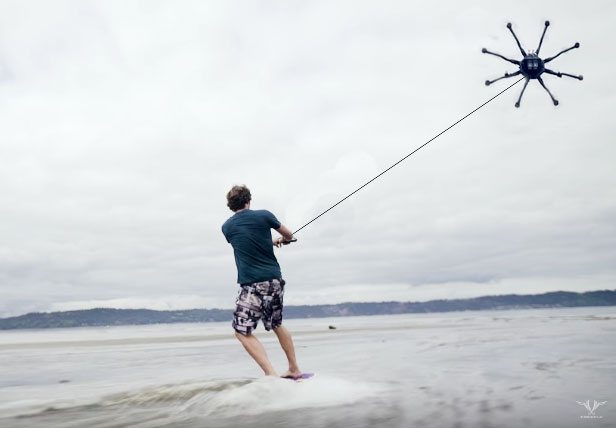
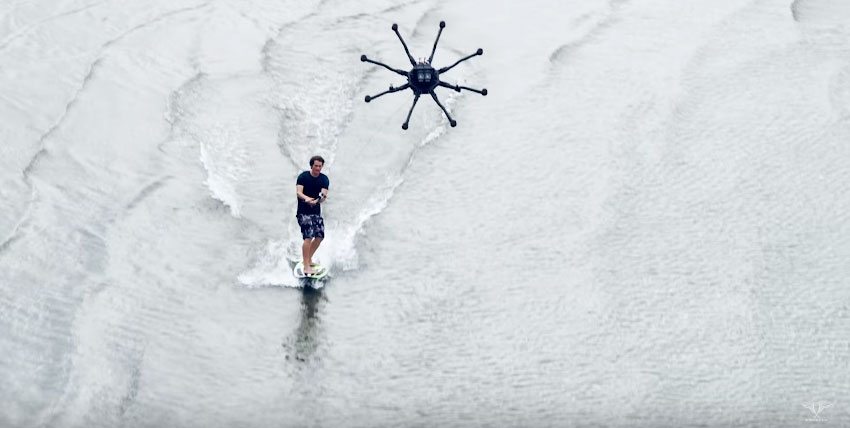
Drone surfing means being towed across the water on a surfboard by an airborne drone, holding a single rope and handle. Think wakeboarding without the boat, or kitesurfing without the kite. No wind, no waves, no engine idling behind you. Just a high-powered drone doing the pulling.
It's the kind of thing you'd probably never have imagined possible. But a new generation of powerful drones has made it real, and it offers a small glimpse into where the tech is heading.
The benefits of drone surfing
- You don't need a kite, sail, boat or waves
- Fewer lines than kitesurfing. Just a single rope and handle
- You can drone surf when there is no wind
- You'll be the only one doing it (at least in the short term)
The drawbacks of drone surfing
- You need to charge or refuel your drone regularly
- If it falls out of the sky you lose an expensive piece of kit
- Accidents involving drone surfers and other surfers will be messy
- You need to carry an octocopter (eight rotor drone) around with you to have fun
- You need someone else to control the drone
- Noise, pollution, energy consumption
Is this the future?
Is this what we'll all be doing in ten years? Getting hauled around by personal drones that record our every move at the same time? Maybe. The fact that drones have evolved into action-sport gear in their own right says a lot about where the tech and engineering have got to. First-generation consumer drones struggled just to lift off with a GoPro strapped on.
And it's worth thinking beyond the fun. That same lifting power has real potential in surf rescue and general emergencies. A drone could conceivably airlift an injured person to hospital at a fraction of the cost of a helicopter.
Remember when we all used to dream about flying cars? Those dreams have started coming true. If you're curious about the machines themselves, we've rounded up the best drones for surf filming. For the bigger picture, see how technology is changing surfing and our look at surfing in 2050.
Frequently asked questions
- Do you need wind or waves for drone surfing?
- No. Drone surfing doesn't require wind, waves, a boat or a kite; the drone provides all the pulling power via a rope and handle.
- What equipment does drone surfing need?
- It requires a high-powered octocopter (eight-rotor drone), a surfboard, a tow rope and handle, and someone to pilot the drone since the rider can't control it themselves.
- What are the risks of drone surfing?
- Key drawbacks include the drone losing power or falling out of the sky (an expensive loss), potential collisions with other surfers, and the need to regularly charge or refuel the drone.
- Could drone technology be used for surf rescue?
- Yes, the same lifting technology used in drone surfing has potential for surf rescue and emergencies, such as airlifting an injured person at a fraction of the cost of a helicopter.