How to Surf Small Waves Better: Speed Tips and Board Choice
Struggling in small surf? Learn how to generate speed on weak waves, the board shape that helps most, and tricks to keep sessions fun.
In this article
In this article, you'll learn
- Why speed off the takeoff is the key to fun small-wave surfing
- What board shape and volume work best in weak surf
- How removing your leash or wearing less rubber adds speed
- Which parts of a small wave give you the biggest speed boost
The key to surfing small waves well is generating speed early: paddle hard, take off at an angle to avoid losing momentum, and ride a wider, thicker board with more foam and volume.
A few tricks and tips to have fun when the surf is tiny.
Is summer coming your way? This might mean small waves and onshore winds, and surfing becomes a bit of a chore. However, there are a few ways to make those small wave sessions fun and playful.
It was four times world champion Australian surfer Mark Richards who once said that the secret to riding small waves is all in your head. While things like the right equipment and the correct accessories do help, if you have the right mental approach then you’re already almost home.
The two most important elements that you need to conditions your brain to deal with is the fact that small wave surfing needs speed, and every surf you ever have, regardless of conditions and wave size, needs to be fun. If you’re not having fun you’re out of the game.
Speed Is Crucial
Small waves generally don’t give you much speed because there is less energy available. To get speed on a small wave you need to paddle as hard as you possibly can, take off sideways to avoid losing speed off the bottom and start pumping as hard as you can from the get-go. If you get speed from the takeoff, your wave is set. If you have speed you can do turns. Even if it is a closeout turn, one floater, a possible air or even a roundhouse cutback (very impressive on a small wave) you should be able to do a turn and throw some spray.
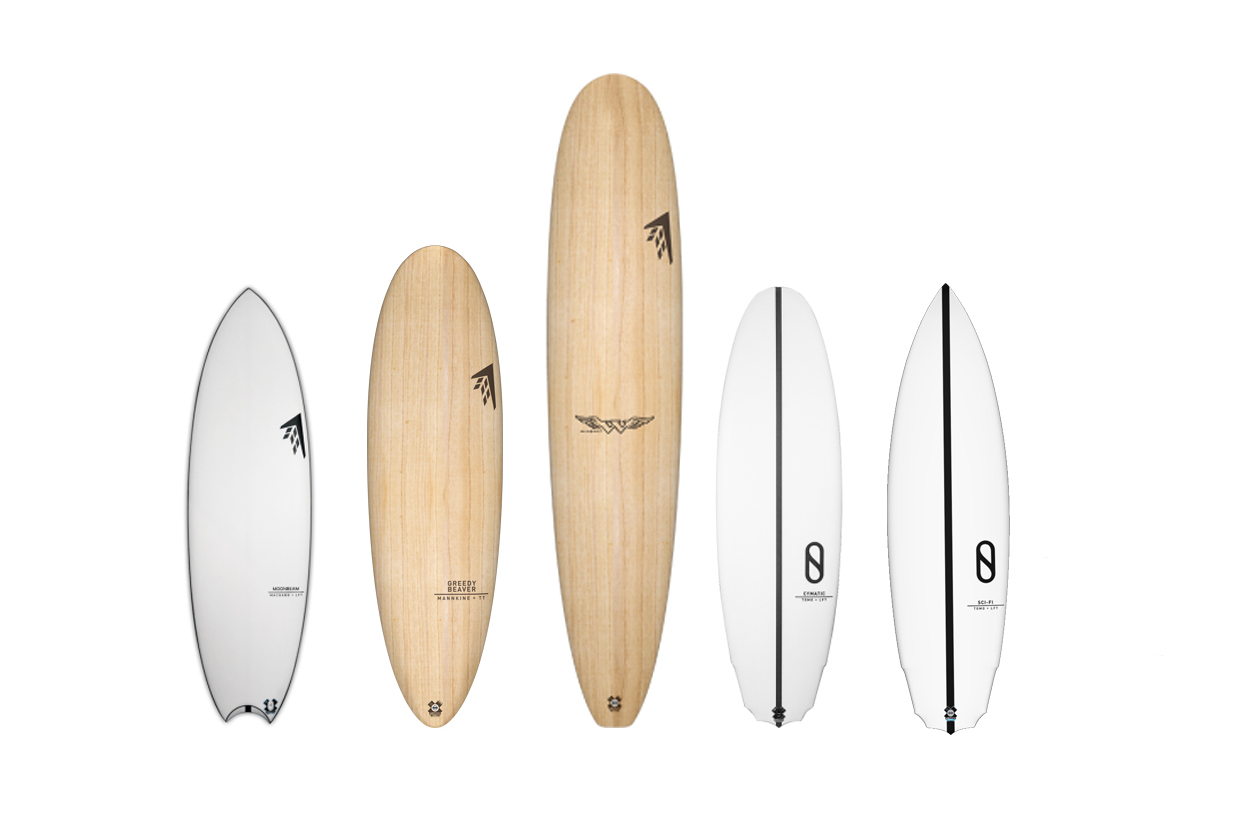
Equipment wise it is the old theory that foam is your friend in smaller surf. So you need more volume. A small-wave board needs to be wider and thicker, with plenty of foam under the chest and a nice chunky tail for getting over flat and dead sections. A wide nose will also help with paddling and catching and should help you generate that speed we spoke about in the beginning. A small wave board should be super-light as well so that you can keep moving rail-to-rail and keep the momentum up even when the wave is weak. There are many boards out there that are particularly made for tiny grovel surf. Channel Islands has a bunch of stock boards made for grovelling, and the Firewire range also has some particular boards, like the Dominator and the Potato that are made specifically for tiny waves. Remember that epoxy has more flotation than a standard PU surfboard. Your local shaper will know exactly what to do if your request is to ‘get going in small waves.’
Deeper concaves under the tail will also help you to keep the board on the rail, and thus generating speed as you turn. If the waves are really powerless, then a four-fin set-up could also help to generate speed when there is none.
Further tips
If you’re a competitive surfer and really want to up your small-wave game, then there are a few other things that you could do. Firstly, you could remove your leash. A leash of any size creates drag, and you will feel the difference surfing without one. Mentally as well, it will make you feel unhindered.
If you’re going to surf for a quick small wave session, wear a thinner wetsuit or a short-armed suit. You’ll be a bit lighter and you will paddle that much faster. You can even venture out in board shorts, for a quick twenty-minute surf; you'll be loose and find yourself paddling faster just to keep warm.
Board Choices
However, if you’re just in the water to cruise and have fun and get away from the stress of life, then change up your board, and take the longest, fattest board you have. That way you’ll catch all the waves. You won’t be able to turn on them, but you’ll still have fun.
Finally, one of the tricks to surfing small waves is to find the fast sections of the waves. This comes with experience. Look for the steepest part of the wave, even if it is onshore, and utilize that part of the wave as much as you can. A good section on a small wave can give you that little burst of speed that you need to get going, and if you have speed in small surf you’re going to be the standout.
That all may sound a bit glamorous and lovely, but make no mistake that the majority of small wave sessions, and in particular onshore small wave sessions, are not going to be as much fun as when the waves are firing. Unless you’re as light as Filipe, as imaginative as John John or as futuristic as Medina, your small wave sessions are always going to be a bit of a bore. Utilize the tips outlaid here, and at least you’ll have a bit more fun in the process.
Frequently asked questions
- What board is best for small waves?
- A small-wave board should be wider, thicker, and lighter with more volume and a chunky tail, since extra foam and flotation help you catch weak waves and keep moving through dead sections.
- How do you generate speed on a small wave?
- Paddle as hard as possible, take off sideways rather than straight down the face to avoid losing speed, and start pumping immediately after takeoff to build momentum.
- Does removing your leash help in small waves?
- Yes, a leash creates drag, so removing it (in appropriate conditions) can noticeably increase your speed and make you feel less hindered.
- Why do surfers use four-fin setups in small waves?
- A four-fin setup can help generate extra drive and speed when wave energy is minimal, which is especially useful in powerless, weak surf.